
News & Updates
Give children equal protection from physical abuse
Posted on
The number of people who think smacking, hitting, slapping, or shaking a child is not acceptable has risen from 67% in 2023 to 71% in 2024*.
Ahead of the next General Election, we’re asking all political parties to scrap ‘reasonable chastisement’ and commit to giving children in England the same protection from physical assault as adults.
Between April 2023 and March 2024, Childline delivered 717 counselling sessions to children with concerns about physical punishment.
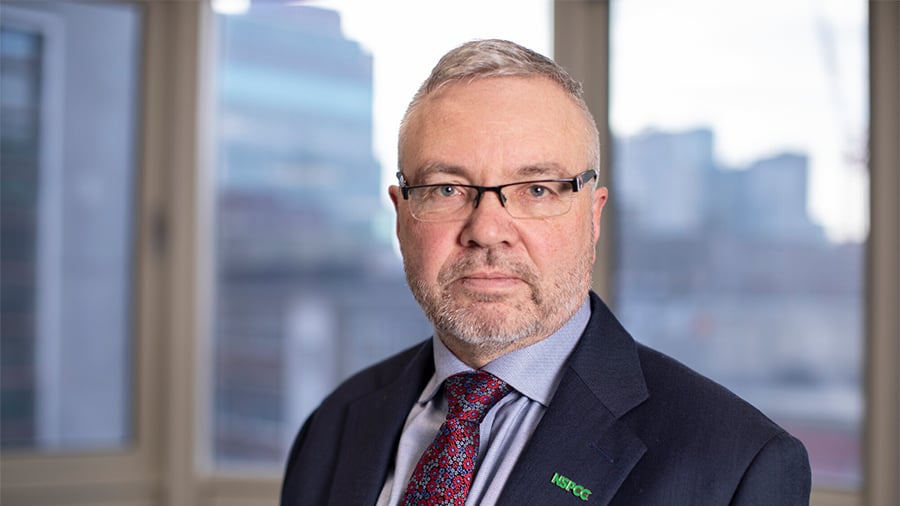
“If an adult hits another adult because they don’t approve of how they’re behaving, it’s described as physical assault. But when a parent takes the same action against their child, the law considers it acceptable. This is not right. – Sir Peter Wanless, NSPCC CEO
“I was messing around with my brothers, and I guess my mum got sick of it and she slapped me. I asked her to apologise but she wouldn’t, she said it was my fault she had to do it.
I’m still so shocked and hurt that she hit me.”
– 13-year-old who contacted Childline.
The result comes from a new YouGov poll of over 3,500 adults across England which also found:
- 55% think physical punishment weakens the relationship between parent and child – up from 51% in 2023.
- 60% think physical punishment has a negative impact on a child’s mental health – up from 56% in 2023.
The survey follows a recent report from The Royal College of Paediatrics and Child Health (RCPCH) which showed that children who experience physical punishment are nearly three times as likely to develop poorer mental health and are more than twice as likely to experience serious physical assault and abuse.
Dr Anja Heilmann from University College London, whose earlier research in collaboration with NSPCC and Barnardo’s helped pave the way for a law change in Scotland on Equal Protection for Children, said:
“In line with the shifting attitudes shown by the polling data, parents’ use of physical punishment has declined over the past decade.
However, it is still unacceptably high: more than one in five 10-year-olds experienced physical punishment in 2020/21, and we know from other studies that for younger children the prevalence is likely to be higher.
Physical punishment is a major and pressing public health and children’s rights issue. It is high time for children to be legally protected from all physical punishment everywhere in the UK.”
Studies show that physical punishment can have harmful consequences for children. It can affect a child’s mental and emotional health, and is particularly associated with conditions such as depression, anxiety, increased aggression, and antisocial behaviour.
This survey also coincides with the publication of a new research briefing by University College London (UCL) on the prevalence of physical punishment in the UK.
Sir Peter Wanless, CEO at the NSPCC, said:“Physical punishment is a major and pressing public health and children’s rights issue. It is high time for children to be legally protected from all physical punishment everywhere in the UK.”
“Year after year, we are seeing growing consensus from the public that it is unacceptable to use physical punishment against children.
“As we head into the next General Election, all political parties should commit to closing off this legal loophole to make it clear that physical punishment should not be part of a child’s experience anywhere in the UK.
“Children deserve the same protection from assault as adults. We call on the next UK Government to bring this legal anomaly to an end in England, once and for all.”
Barnardo’s Chief Executive Lynn Perry MBE said: “Physical punishment is unacceptable. We know it is harmful for their health and development – whilst there is also strong evidence that it influences their attitudes to violence.
The NSPCC’s new polling confirms that a majority of the public share our belief that physically punishing a child is unacceptable.
It’s time for children to be legally protected from all physical punishment everywhere in the UK.”