
News & Updates
Stop Child Abuse Newsletter
Posted on
Newsletter – October 2024
  Violence Against Children Reported in the Media for October 2024 Each passing month serves as a heartbreaking reminder that children remain vulnerable to many forms of violence. The figures we report are not mere statistics; they represent real lives enduring unimaginable suffering. Regrettably, the cases we document continue to be on the rise, highlighting the widespread nature of child abuse. This monthly newsletter is a vital resource for the public, providing insight into the scope of these abuses and underscoring the urgent need for action. The incidents reported in October 2024, as with those in previous months, highlight the disturbing frequency of such cases, including the distressing reality of child sexual exploitation. Our Media Monitoring team remains dedicated to tracking these developments, ensuring that we capture a comprehensive overview of the situation across various media platforms. This newsletter reflects our ongoing commitment to the global standards set by UNICEF’s International Classification of Violence against Children (ICVAC). It is essential that we continue to raise awareness, support preventive measures, and advocate for the rights and protection of children worldwide. The path forward demands action, and your awareness and engagement are critical in this fight. 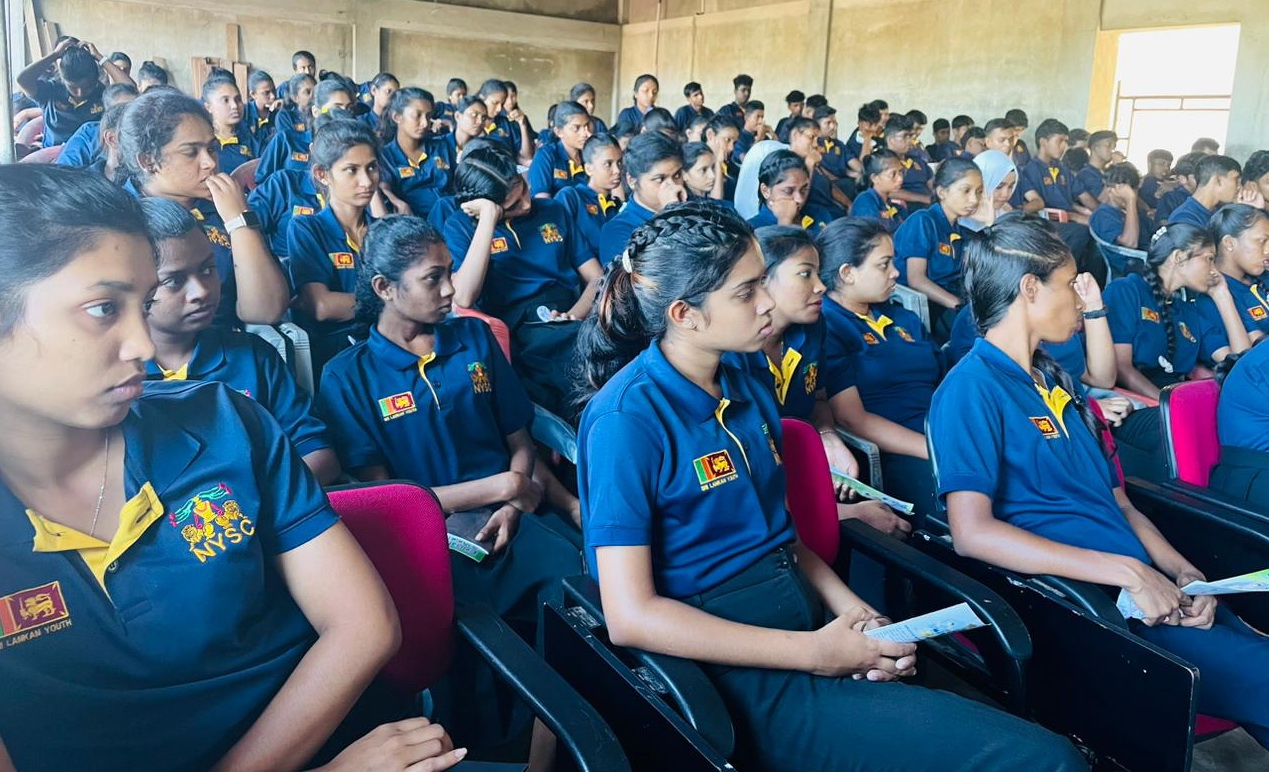 Our partnership with the National Youth Services Council (NYSC) of Sri Lanka exemplifies a robust commitment to fostering a safer environment for children and youth across the nation. As the largest government-sponsored youth network, NYSC’s extensive reach into all 25 districts provides a platform for raising awareness on child protection. Our partnership with the National Youth Services Council (NYSC) of Sri Lanka exemplifies a robust commitment to fostering a safer environment for children and youth across the nation. As the largest government-sponsored youth network, NYSC’s extensive reach into all 25 districts provides a platform for raising awareness on child protection. Through this collaboration, we are actively training 25 youth leaders in each district, equipping them to become advocates and agents of change against Child Sexual Exploitation and Abuse (CSEA). This initiative empowers local communities, significantly reducing the vulnerability of children and youth. Together, we are creating a ripple effect of positive change, ensuring a future where every child can thrive in a secure and supportive environment. 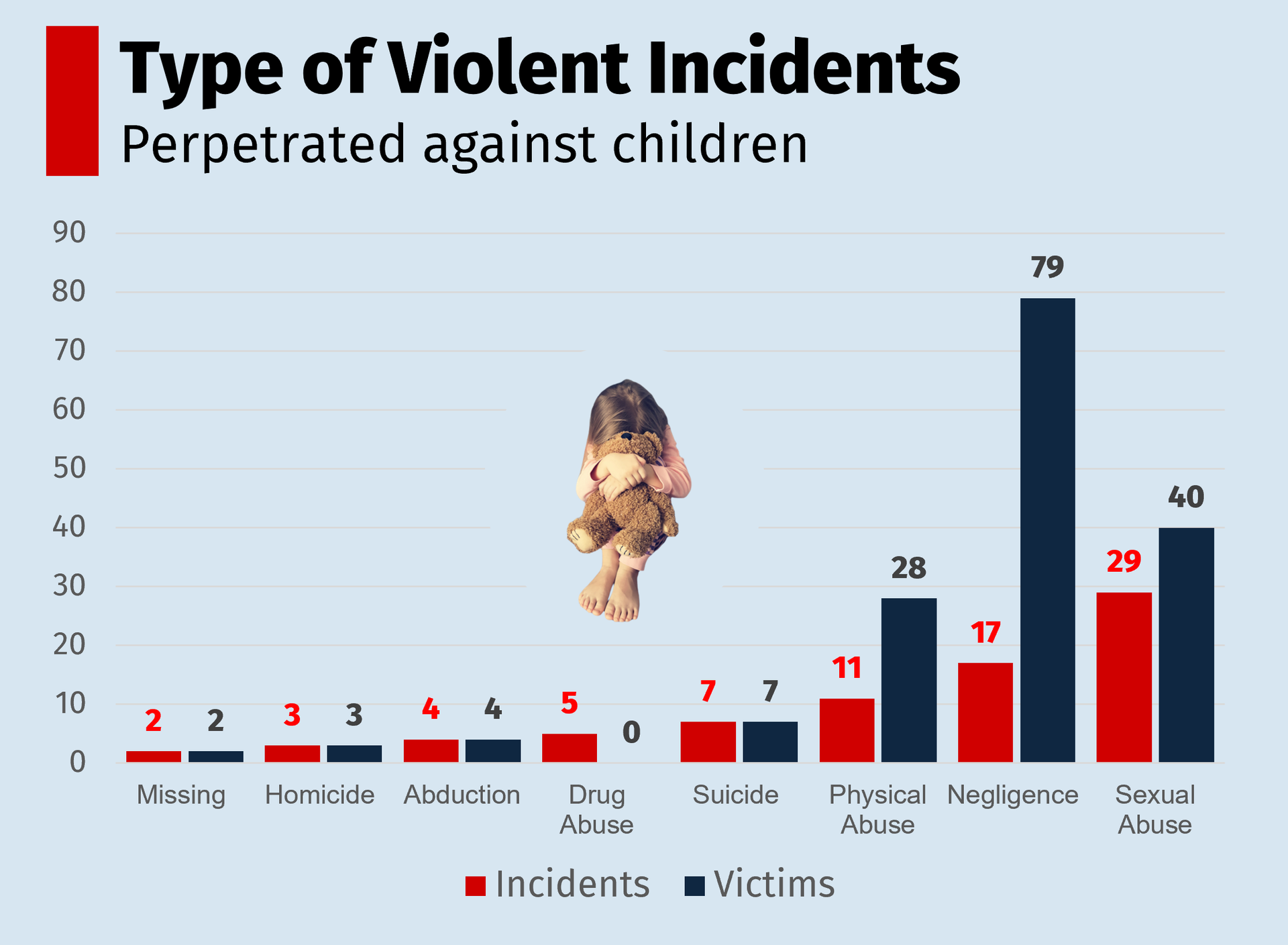 The October data highlights a concerning rise in violence against children, with 78 incidents affecting 163 victims, marking an increase from the prior month by 17 incidents and 68 victims. This data sheds light on the types of violence and their prevalence. Negligence emerges as a predominant issue, accounting for 17 incidents (21.79%) and affecting 79 victims (48.47%). Sexual abuse comprises 29 incidents (37.18%) and affects 40 victims (24.54%). The October data highlights a concerning rise in violence against children, with 78 incidents affecting 163 victims, marking an increase from the prior month by 17 incidents and 68 victims. This data sheds light on the types of violence and their prevalence. Negligence emerges as a predominant issue, accounting for 17 incidents (21.79%) and affecting 79 victims (48.47%). Sexual abuse comprises 29 incidents (37.18%) and affects 40 victims (24.54%).Physical abuse, although lesser in comparative numbers, still poses a significant issue with 11 incidents (14.10%) and 28 victims (17.18%). Suicide is also a troubling concern with 7 incidents and victims each, reflecting serious self-harm issues among vulnerable children. Notably, no incidents or victims were reported this month for emotional abuse and trafficking, which offers a specific focus on other pressing issues. 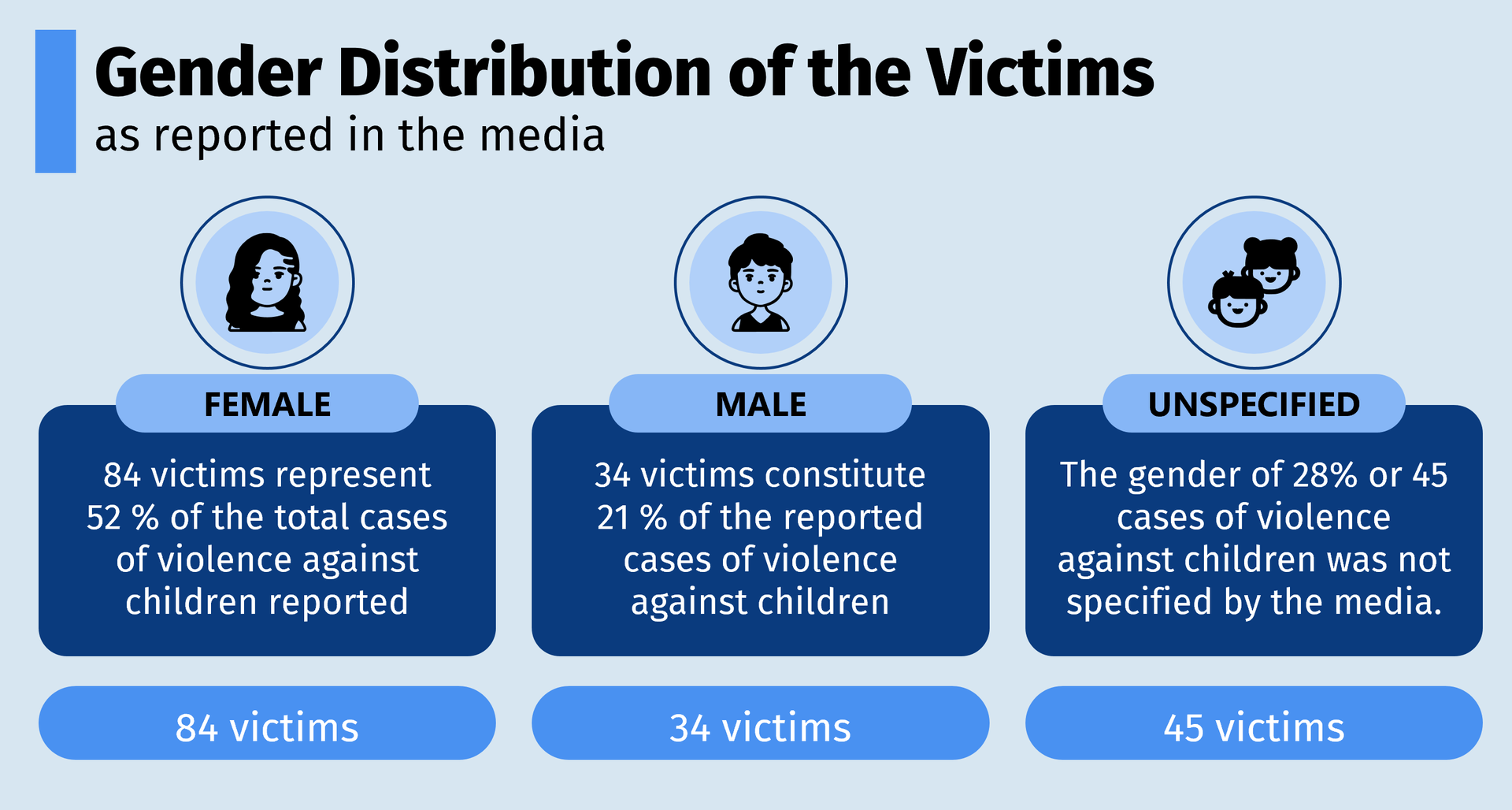 During this time frame, a gender analysis of the impacted children showed that females were the predominant group among the victims, numbering 84. In contrast, 34 affected children were male. Additionally, it was noted that a significant 28% of the victims lacked sufficient information to determine their gender. This resulted in 45 individuals being categorized as ‘unspecified’ concerning their gender, pointing to a gap in media coverage on this aspect. During this time frame, a gender analysis of the impacted children showed that females were the predominant group among the victims, numbering 84. In contrast, 34 affected children were male. Additionally, it was noted that a significant 28% of the victims lacked sufficient information to determine their gender. This resulted in 45 individuals being categorized as ‘unspecified’ concerning their gender, pointing to a gap in media coverage on this aspect. 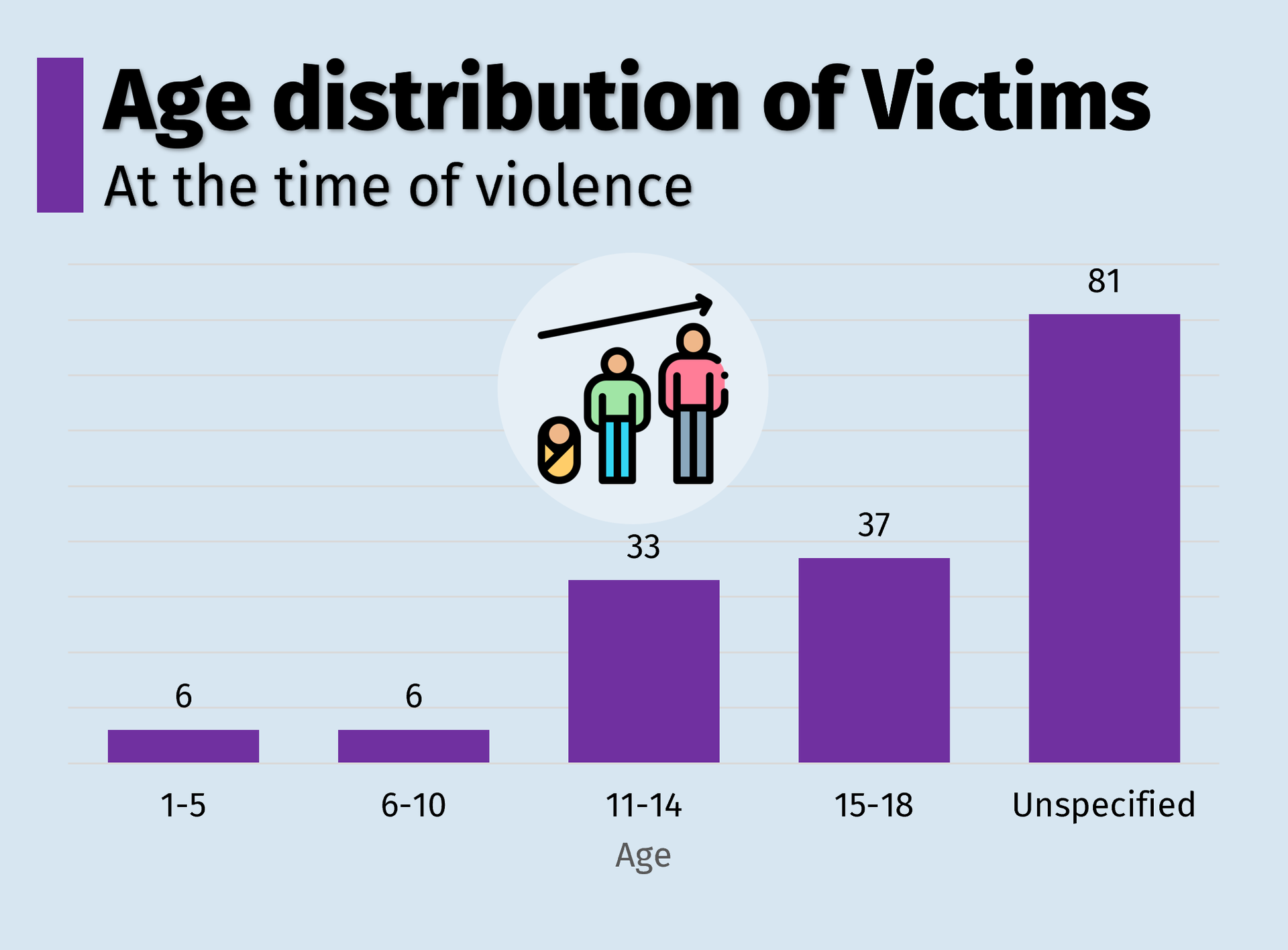 The age distribution of victims reported in October 2024 underscores the susceptibility of children across various age brackets. Unlike the preceding month of September, adolescents aged between 15 and 18 years constituted 22% of the victims. Early teenagers, those aged 11 to 14, made up 33 of the victims, accounting for 20%. Previously in September, the majority were younger children. Notably, this month, the age of over half (81 victims) was not specified, highlighting persistent issues in data collection and reporting. These unspecified victims could belong to any age category. Interestingly, October recorded no victims under the age of 12 months. The age distribution of victims reported in October 2024 underscores the susceptibility of children across various age brackets. Unlike the preceding month of September, adolescents aged between 15 and 18 years constituted 22% of the victims. Early teenagers, those aged 11 to 14, made up 33 of the victims, accounting for 20%. Previously in September, the majority were younger children. Notably, this month, the age of over half (81 victims) was not specified, highlighting persistent issues in data collection and reporting. These unspecified victims could belong to any age category. Interestingly, October recorded no victims under the age of 12 months. 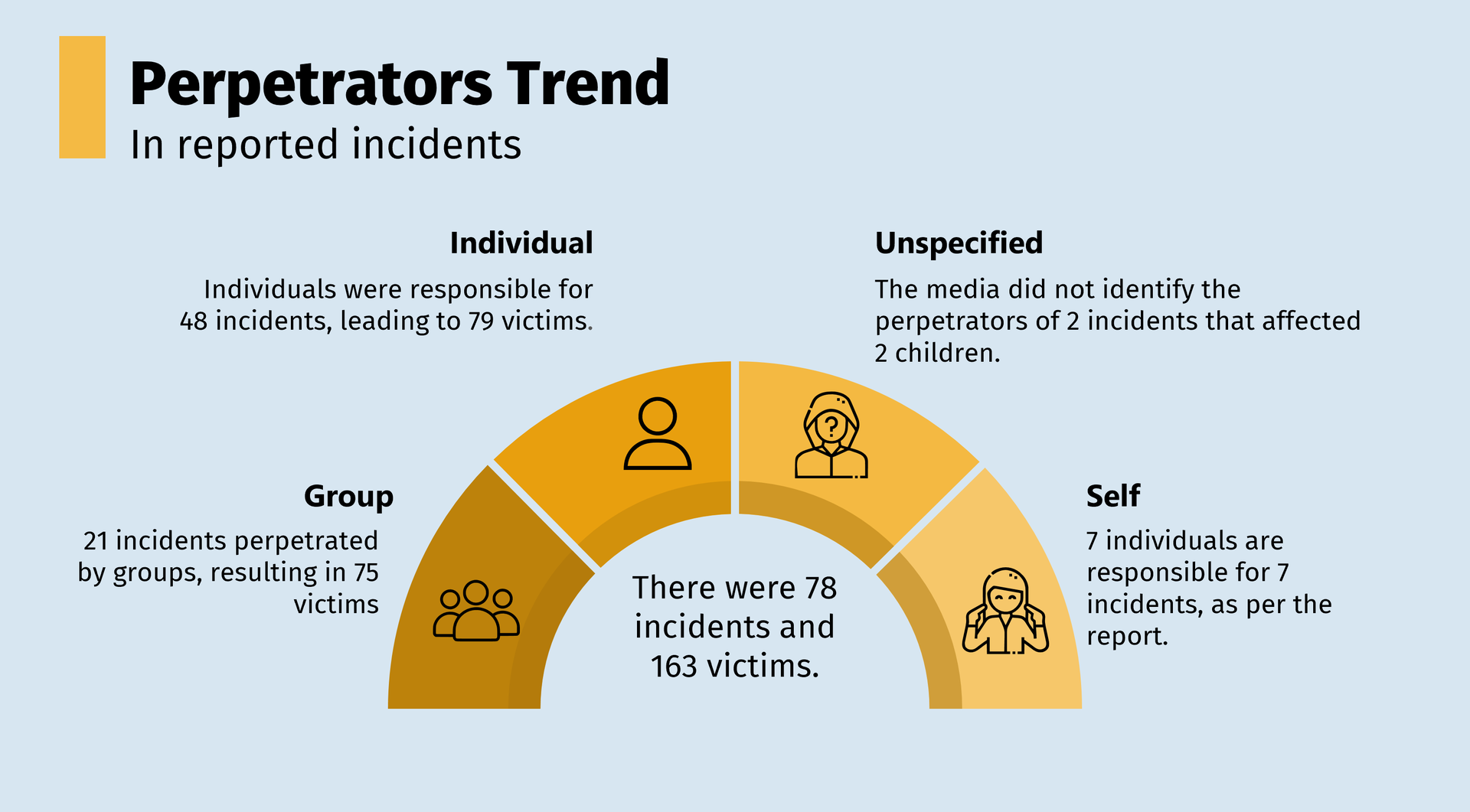 The data from October 2024 depicts concerning trends in violence against children, highlighting the roles played by both individuals and groups as perpetrators. Individuals were responsible for a significant number of incidents, with 48 cases resulting in 79 victims. This indicates a high victim-per-incident ratio, suggesting the severe impact of these acts. Additionally, groups were involved in 21 incidents leading to 75 victims, which signifies organised or collective violence and also shows a high victim count per incident. Furthermore, there were 7 incidents directly linked to identified individuals, one per incident, emphasising individual culpability. There are also 2 incidents involving unidentified perpetrators, resulting in 2 victims. The data from October 2024 depicts concerning trends in violence against children, highlighting the roles played by both individuals and groups as perpetrators. Individuals were responsible for a significant number of incidents, with 48 cases resulting in 79 victims. This indicates a high victim-per-incident ratio, suggesting the severe impact of these acts. Additionally, groups were involved in 21 incidents leading to 75 victims, which signifies organised or collective violence and also shows a high victim count per incident. Furthermore, there were 7 incidents directly linked to identified individuals, one per incident, emphasising individual culpability. There are also 2 incidents involving unidentified perpetrators, resulting in 2 victims. 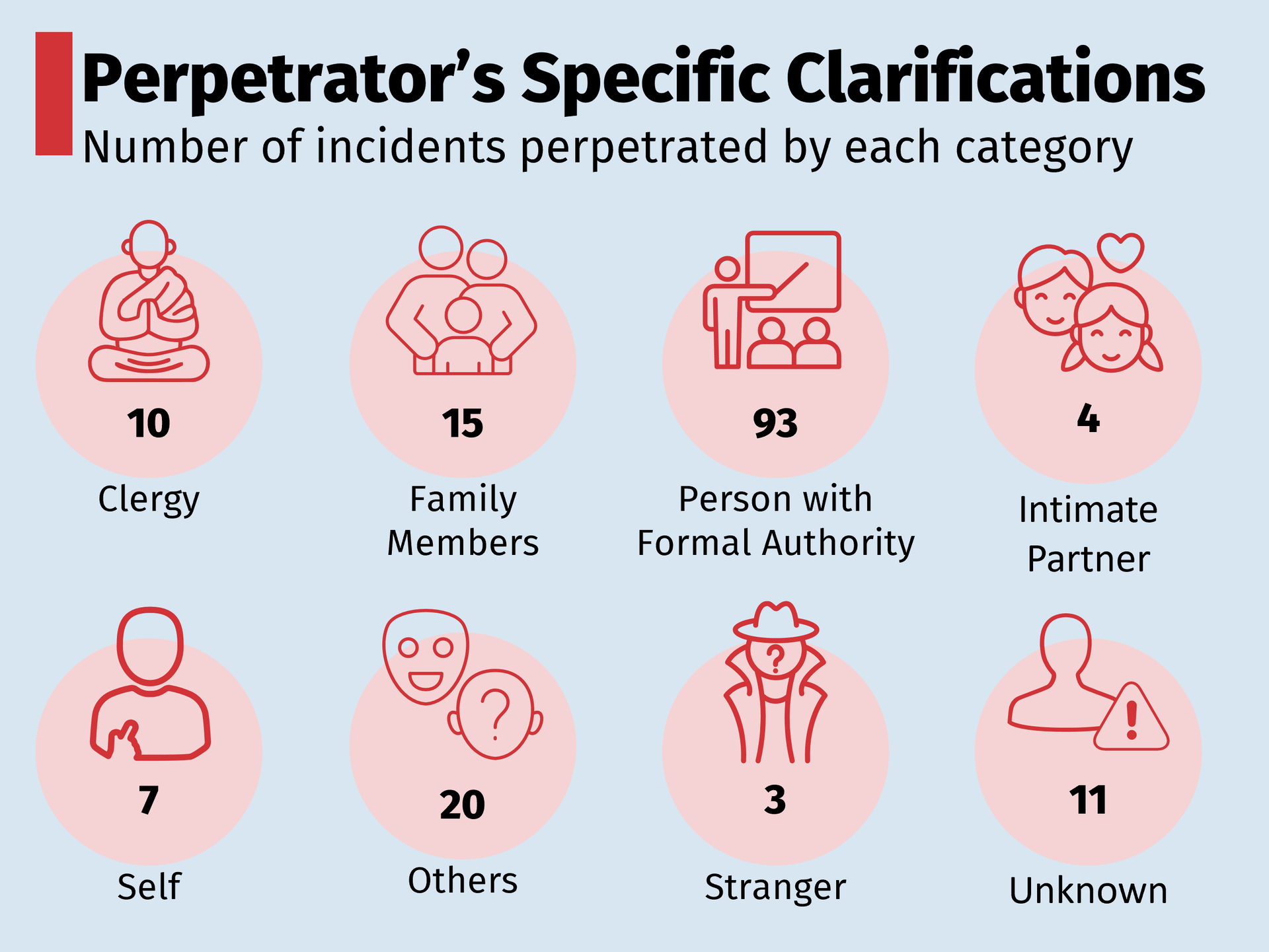 A detailed analysis of perpetrators and their classifications in these cases shows that individuals labeled as Persons with Formal Authority victimized 93 children, making up about 57% of the incidents. This is the most dominant category since June 2024, underscoring a growing issue with people in power—such as teachers and government officials—being frequently involved in child abuse. Moreover, it is particularly alarming that family members are implicated in 9% of the reported cases, affecting 15 victims, indicating that abuse often occurs in the home, where children ought to feel safest. A detailed analysis of perpetrators and their classifications in these cases shows that individuals labeled as Persons with Formal Authority victimized 93 children, making up about 57% of the incidents. This is the most dominant category since June 2024, underscoring a growing issue with people in power—such as teachers and government officials—being frequently involved in child abuse. Moreover, it is particularly alarming that family members are implicated in 9% of the reported cases, affecting 15 victims, indicating that abuse often occurs in the home, where children ought to feel safest.There is also a notable rise in cases involving clergy members, who account for 6.13% of incidents, with no cases reported involving peers this month. Eleven cases involved unidentified perpetrators, pointing out challenges in the identification or reporting of abusers. Additionally, seven cases pertained to the victims themselves, potentially indicating situations of self-harm or neglect. Although 20 cases fell under an ‘other’ category, these perpetrators have not been distinctly identified. 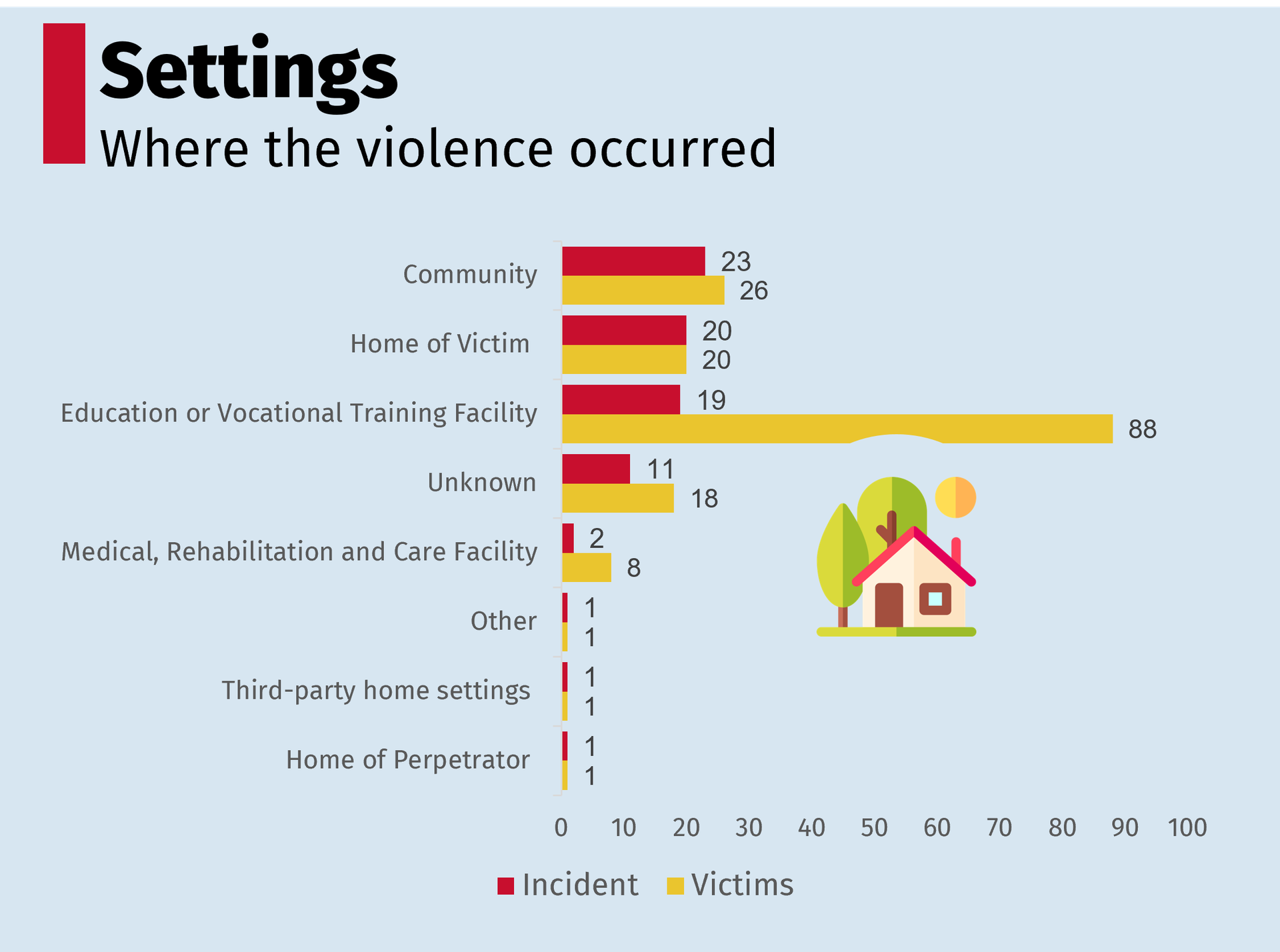 In October, educational and vocational training facilities recorded the highest number of child abuse victims, with 88 victims (54%) across 19 incidents. This was also true in September, with these settings being the most reported locations for abuse incidents. This is deeply concerning, as such establishments have a legal responsibility to protect and safeguard children. The second-highest number of victims, accounting for 15%, occurred in community settings, with 26 children affected across 23 cases. In October, educational and vocational training facilities recorded the highest number of child abuse victims, with 88 victims (54%) across 19 incidents. This was also true in September, with these settings being the most reported locations for abuse incidents. This is deeply concerning, as such establishments have a legal responsibility to protect and safeguard children. The second-highest number of victims, accounting for 15%, occurred in community settings, with 26 children affected across 23 cases.The home environment showed alarming statistics with 20 incidents impacting 20 children, contributing 12.2% to the total. Equally concerning is the ‘unknown’ category, which accounted for 11 incidents and 18 victims, making it the second-highest contributor for this month. Unlike September, medical and care facilities reported 8 children harmed across 2 incidents. Meanwhile, the home of the perpetrator, third-party home settings, and other locations each reported only 1 case and 1 victim. No incidents were reported on digital platforms. 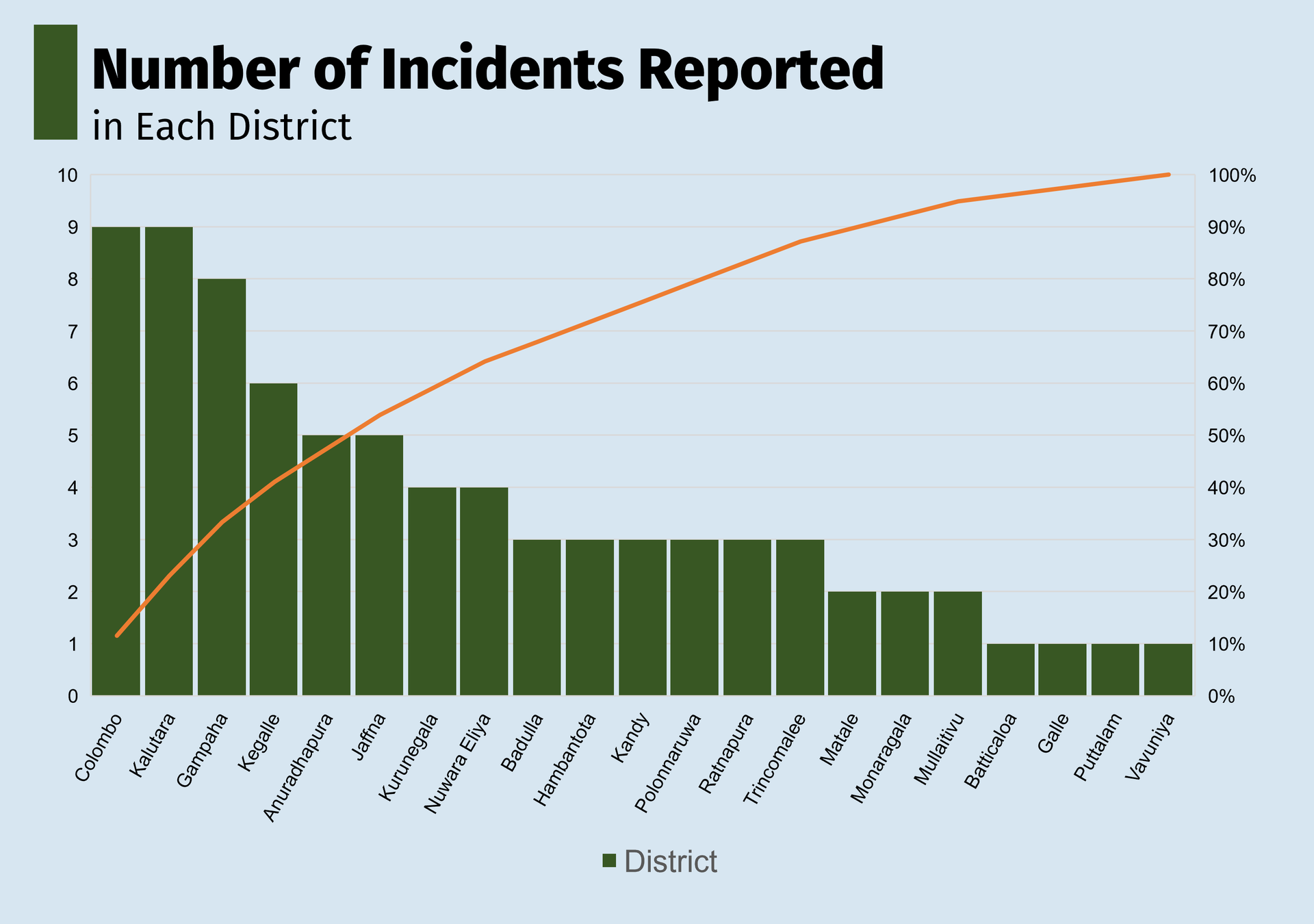 In the month of October, media outlets have reported incidents from 21 out of the 25 districts in the country. Nuwara Eliya recorded the highest number of victims, with 35 reported across 4 cases. Ratnapura followed closely, with 28 victims and 3 cases. While Kalutara and Colombo had the highest number of incidents, the victim counts in these districts were 22 and 12, respectively. Anuradhapura recorded 11 victims from 5 incidents, and Kegalle had 10 victims from 6 incidents. Batticaloa, Galle, Puttalam, and Vavuniya each recorded one incident and one victim. Matale, Monaragala, and Mullaitivu each reported 2 incidents and 2 victims. Badulla, Hambantota, and Trincomalee each recorded 3 incidents and 3 victims, while Kurunegala reported 4 incidents, resulting in 4 victims. In the month of October, media outlets have reported incidents from 21 out of the 25 districts in the country. Nuwara Eliya recorded the highest number of victims, with 35 reported across 4 cases. Ratnapura followed closely, with 28 victims and 3 cases. While Kalutara and Colombo had the highest number of incidents, the victim counts in these districts were 22 and 12, respectively. Anuradhapura recorded 11 victims from 5 incidents, and Kegalle had 10 victims from 6 incidents. Batticaloa, Galle, Puttalam, and Vavuniya each recorded one incident and one victim. Matale, Monaragala, and Mullaitivu each reported 2 incidents and 2 victims. Badulla, Hambantota, and Trincomalee each recorded 3 incidents and 3 victims, while Kurunegala reported 4 incidents, resulting in 4 victims. The findings from October 2024 highlight a concerning rise in child abuse, with negligence emerging as the most common form of harm. Sexual abuse and physical violence also remain equally significant. Perpetrators are frequently individuals in positions of authority, such as teachers and government officials, indicating a troubling abuse of power. Family members are implicated in a considerable number of cases, exposing the vulnerability of children within their own homes. The data also reveals gaps in reporting, with a notable proportion of cases involving unknown perpetrators and unspecified victim details. Educational institutions continue to be the highest-risk settings for abuse, emphasising the need for stronger safeguards in environments that should be providing care and protection. Moreover, the analysis highlights challenges in data collection and reporting, particularly with regard to gender and age identification, which further complicates efforts to understand and address the issue fully. PEaCE | ECPAT Sri Lanka 39/4, Jayasinghe Road Colombo 00600 Sri Lanka |